Animals and World Religions
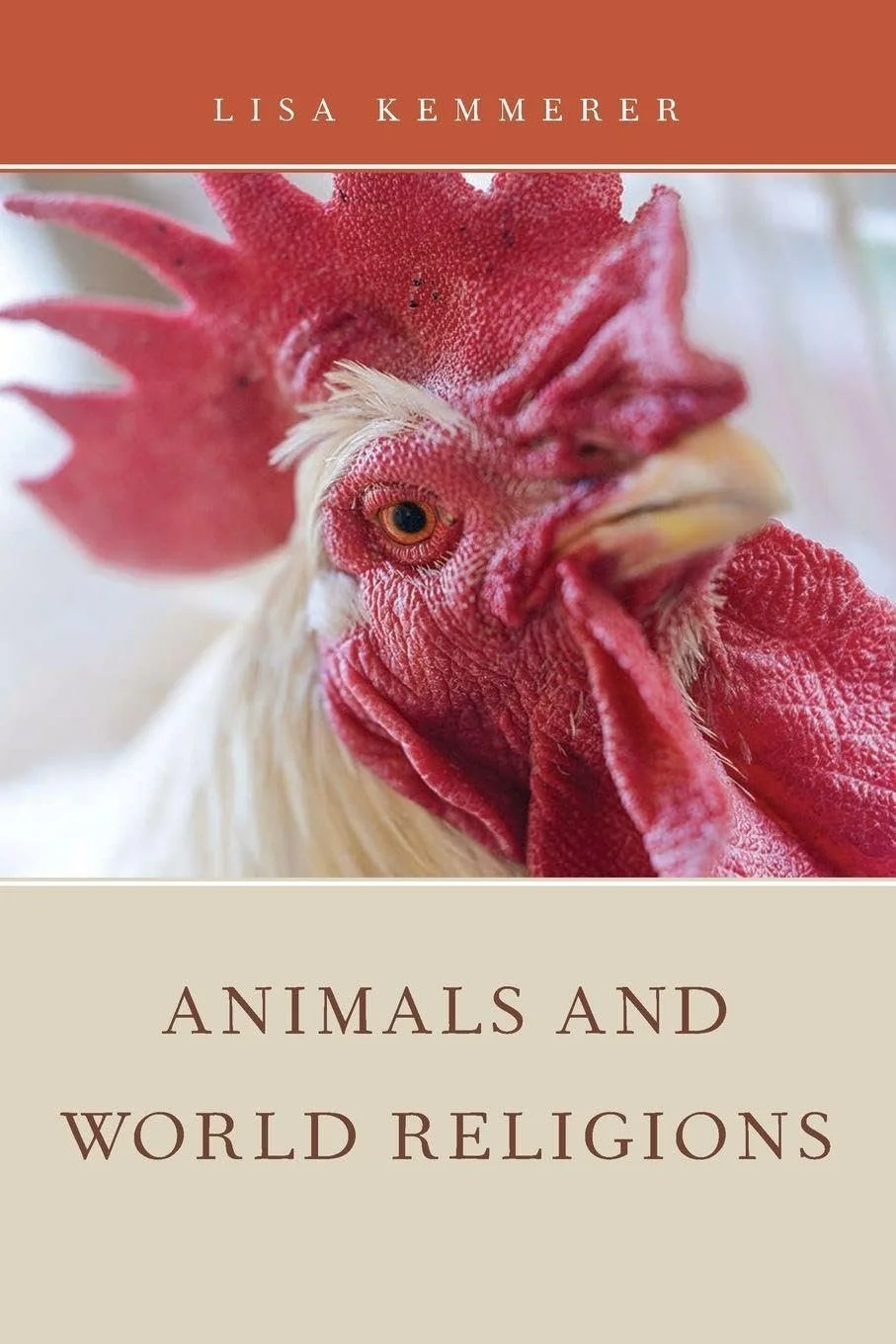
Winner of S&P Award, Best Spiritual Books of 2012
Dr. lisa kemmerer
ISBN: 978-0199790685
Publisher: Oxford University Press, 2012
Overview
Animals and World Religions is not just the first of its kind but remains the only comprehensive, systematic coverage of animal ethics across each major religion. Animals and World Religions explores eight world religions plus a variety of indigenous traditions focusing primarily on animal ethics, but also exploring environmental ethics. Each section examines what core sacred texts have to say about our place in the larger universe, about what we are to eat, and about what our role ought to be with regard to bringing much-needed changes in contemporary societies. On a planet where habitat destruction and species extinction threaten the balance of life, Animals and World Religions explores what fundamental sacred texts teach about our rightful place in a sacred universe.
Videos
Asian Religions, Talking Vegan
Talking Vegan with People of Faith
Book Quotes
“If we stand within one of the world’s great religions, and if we have integrity in our religious commitments, we can and must reject anymal exploitation in all of its insidious forms.”
— Animals and World Religions
“Our dietary choices determine where others work. Will our poorest laborers work in fields of green or in buildings of blood?”
— Animals and World Religions
“Anymal liberationists exemplify what it is to live into the core teachings of every major religion concerning rightful relations between human beings and anymals.”
— Animals and World Religions
“If one focuses on foundational religious texts and core teachings from any of the world’s major religions, it is much easier to defend anymal liberation than it is to defend anymal exploitation.”
— Animals and World Religions